Your Tesla’s 12V battery is failing — the app is throwing warnings, the touchscreen is sluggish, or the car just won’t wake up. Now you need to know what it’ll actually cost to fix it before you call anyone. The answer depends on your model, who does the work, and whether you need a lithium or lead-acid unit.
What Tesla service charges to replace the 12V
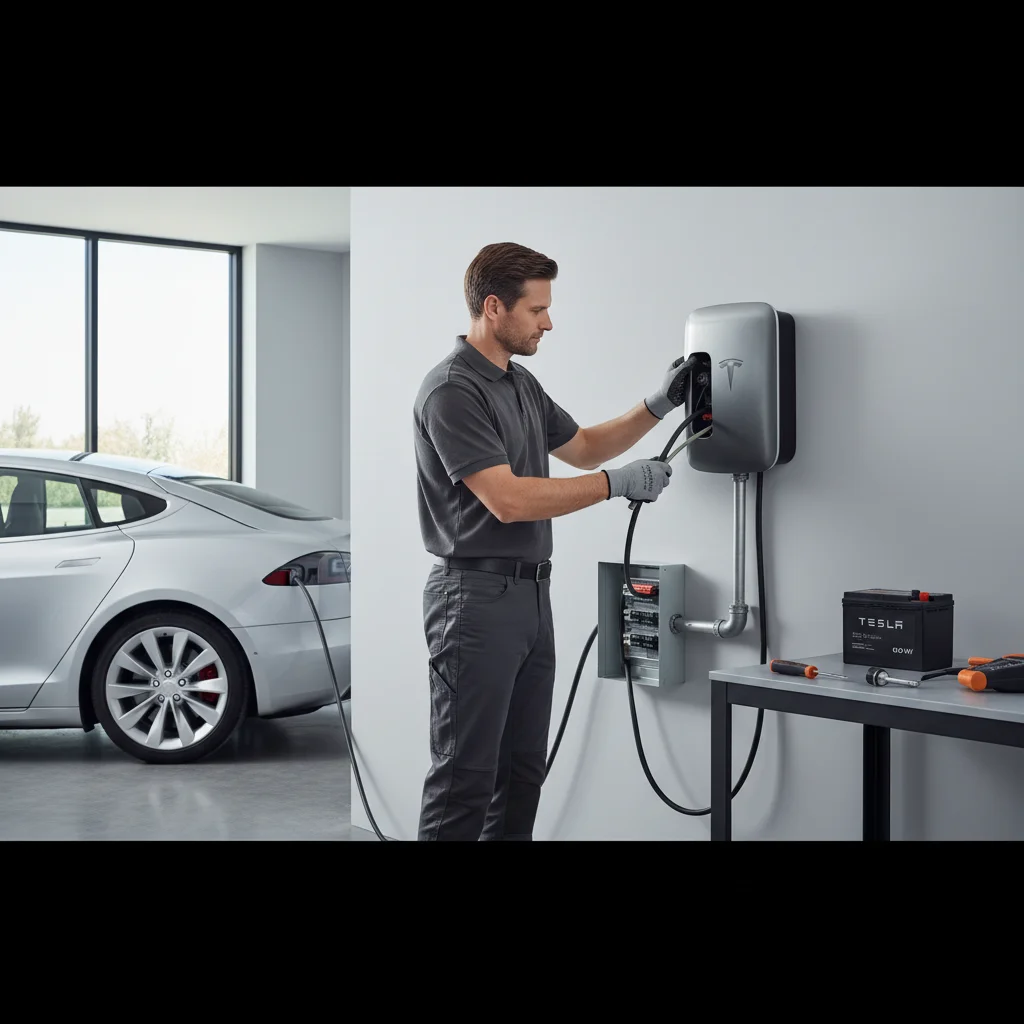
Tesla’s own service centers are the most predictable option, but they’re not cheap. In California, expect to pay in the range of $300–$600 for a full 12V replacement through Tesla — parts plus labor.
The spread is wide because labor rates vary by location and appointment type. The San Diego Tesla Service Center on Kearny Mesa Road typically books several days out for non-emergency work, and the flat labor charge can run $150–$200 on top of the part itself. Mobile service appointments are available for some 12V jobs, but Tesla’s mobile tech availability in SD County is inconsistent and can take just as long to schedule.
If your car is still under the Tesla Basic Vehicle Limited Warranty (4 years/50,000 miles), the 12V replacement is covered at no charge. Same goes for active Tesla Extended Service Agreements. Check your Tesla account before you pay anything.
One thing to confirm when booking: Tesla will charge the diagnostic fee — usually around $75–$100 — if the 12V turns out not to be the root problem. If you’ve already done some homework on what Tesla 12V battery failure actually looks like, you’ll walk in more prepared and less likely to get surprised by that charge.
Lead-acid vs lithium 12V replacement cost
This is where model year matters a lot.
Model S and Model X (pre-2021)
Older Model S and X vehicles use a traditional lead-acid 12V battery — the same chemistry you’d find under the hood of a gas car. Replacement cost for the part alone runs about $100–$150 for a compatible aftermarket unit. Tesla’s OEM lead-acid replacement is closer to $185–$220 just for the part.
The catch: Model S and X battery placement is more involved. The battery lives in the front trunk area but requires more disassembly to access safely. DIY is doable but takes 45–90 minutes if you know what you’re doing.
Model 3 and Model Y (2021 and newer)
Tesla switched these models to a proprietary lithium-ion 12V battery. It’s lighter, charges faster off the main pack, and typically lasts longer than lead-acid — but the part cost reflects all of that. Tesla’s lithium 12V unit runs $170–$250 for the part, and third-party lithium replacements compatible with Model 3/Y are now available from a handful of suppliers in the $130–$180 range.
Total out-of-pocket at a Tesla service center for a lithium 12V replacement on a Model 3 or Y: roughly $350–$550 in California once labor is added. Independent EV shops in San Diego County typically come in $75–$150 lower on the same job.
Our 2026 EV 12V battery failure data shows Model 3 lithium units averaging about 4–5 years before replacement — so if your 2020 or 2021 Model 3 is acting up, the timing tracks.
DIY replacement: parts, time, and risk
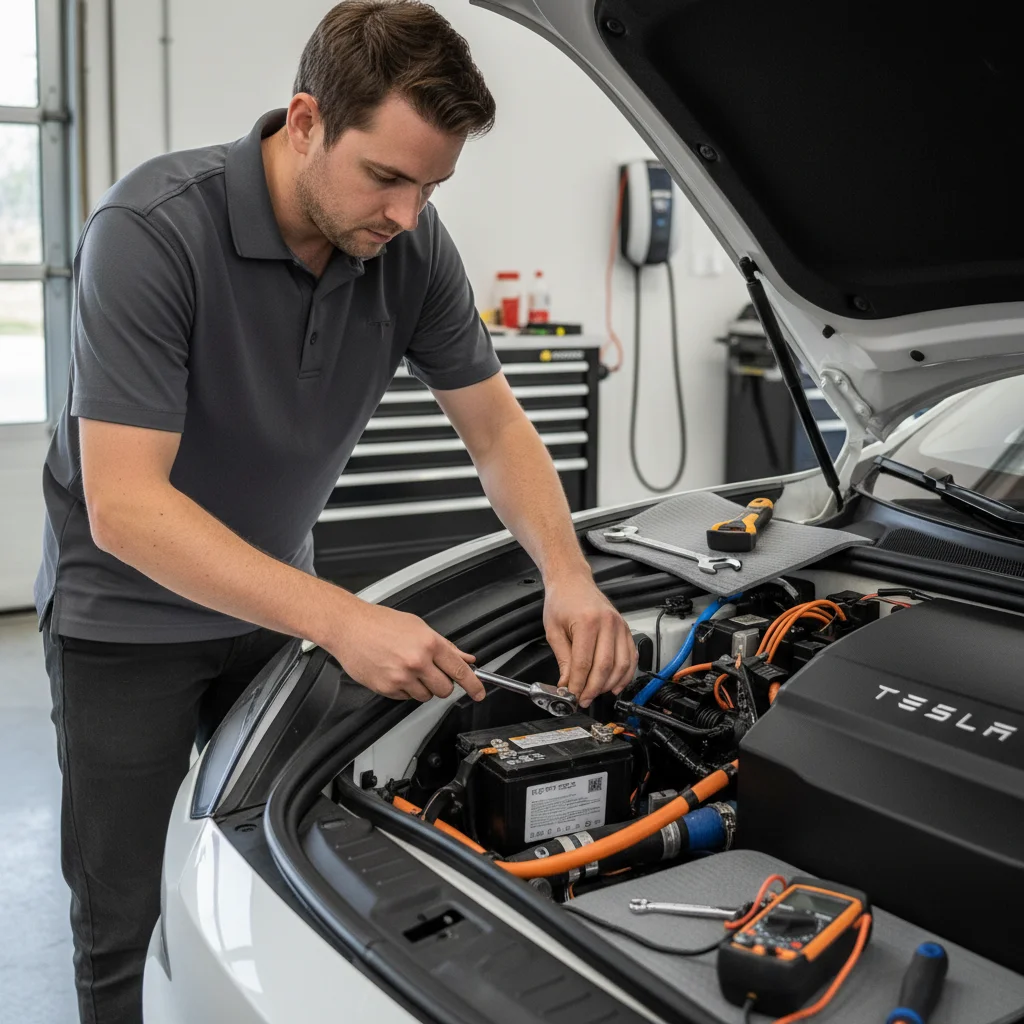
Plenty of Tesla owners replace their own 12V batteries. It’s not illegal, it won’t void your main battery warranty (that’s a common myth), and the job itself is genuinely straightforward on most models — assuming the car still has enough power to unlock.
What you’ll need:
- Correct replacement battery (lithium for 2021+ Model 3/Y; lead-acid or lithium upgrade for older S/X)
- 10mm socket, T20 Torx, and a trim pry tool
- A multimeter to confirm the new battery is seating correctly
- About 60–90 minutes if it’s your first time
Realistic parts cost:
- Lead-acid (Model S/X): $100–$150 aftermarket
- Lithium (Model 3/Y compatible): $130–$180 aftermarket
- Tesla OEM lithium: $170–$250 direct
The risks are real but manageable. The biggest one: if your 12V is completely dead, you may not be able to open the frunk, unlock the car, or access the battery at all without jumping the 12V first. That’s not a hypothetical — it’s the scenario that strands people. Our Tesla 12V battery jump service exists specifically for that moment, to get you enough power to complete the swap or get to a shop.
A second risk is connector damage on the lithium units. The Model 3/Y lithium 12V uses a keyed connector that cracks if forced. Go slow, and watch a model-specific teardown video before you touch anything.
If the car is already locked out or the touchscreen is completely dark, DIY isn’t the starting point — a jump is.
Mobile alternatives in San Diego
Independent mobile mechanics and EV-specific shops in San Diego County have gotten comfortable with Tesla 12V work over the past few years. A mobile technician who comes to your home or office typically charges $200–$350 all-in for a lead-acid swap on a Model S/X, or $280–$420 for a lithium replacement on a Model 3/Y — less than Tesla service in most cases, and far more convenient.
Yelp and Google will surface several options in the county. When vetting any shop, ask specifically whether they stock the lithium unit for your model year, not just a generic lead-acid. Some mobile mechanics still show up with the wrong chemistry and try to make it work.
For drivers who want the replacement done but are currently stuck — dead 12V, won’t open, won’t start — the sequence is: jump first, replace second. A mobile jump gets the car awake so you can then drive to a shop, complete a DIY swap, or have a mobile tech do it on-site.
San Diego’s climate is genuinely hard on lead-acid 12V batteries. Extended heat exposure (think a summer afternoon in El Cajon or Santee) accelerates sulfation and shortens battery life compared to what you’d see in a cooler coastal climate. If you’re inland, plan for the shorter end of the replacement interval.
Signs you need replacement, not just a jump
A jump gets you moving. It doesn’t fix a dying battery. These signs point to replacement:
The battery keeps failing. If you’ve jumped it once in the last six months and it’s dead again, you’re past the jump-and-go stage. A healthy 12V doesn’t repeatedly discharge under normal use.
Voltage doesn’t hold. After a jump, a good 12V should sit at 12.6–12.8V at rest. If it drops below 12.0V within a few hours, the cells can’t hold a charge anymore.
Age is past the window. Lead-acid 12V batteries in Teslas average 3–5 years. Lithium units in newer models run longer — often 5–7 years — but they still fail. If your car is pushing that range and showing any symptoms, replace proactively rather than waiting for a lockout.
Error codes persist after a jump. A genuine 12V replacement need often shows up as persistent low-voltage alerts, alert 12V_f061 or similar codes, or recurring “Schedule Service” notifications in the app even after the battery appears to recover. Our post on Tesla 12V battery failure symptoms breaks these codes down in more detail.
If you’re not sure whether you need a jump or a full replacement, start with the jump. It’s $60–$100 from a mobile service, gives you immediate mobility, and tells you a lot about battery health based on how it recovers.
When to call Charge Pro
If your Tesla’s 12V is dead right now — car won’t unlock, frunk won’t open, touchscreen is dark — that’s a job for our mobile rescue team before any replacement can happen. We run a Cybertruck-based rescue rig across San Diego County and can get you awake fast, whether you’re in La Jolla, Chula Vista, or stuck on the 15 near Miramar.
Call us at (858) 808-6055 — we’ll roll a Cybertruck rescue truck to you.