You pull into the Supercharger, low on battery, and see the dreaded sight: every stall is full with a line of cars waiting, or worse, the entire station is offline. It’s a frustrating moment for any EV driver, especially in a busy area like San Diego County. This isn’t just an inconvenience; if your state of charge (SoC) is in the single digits, it’s a potential emergency.
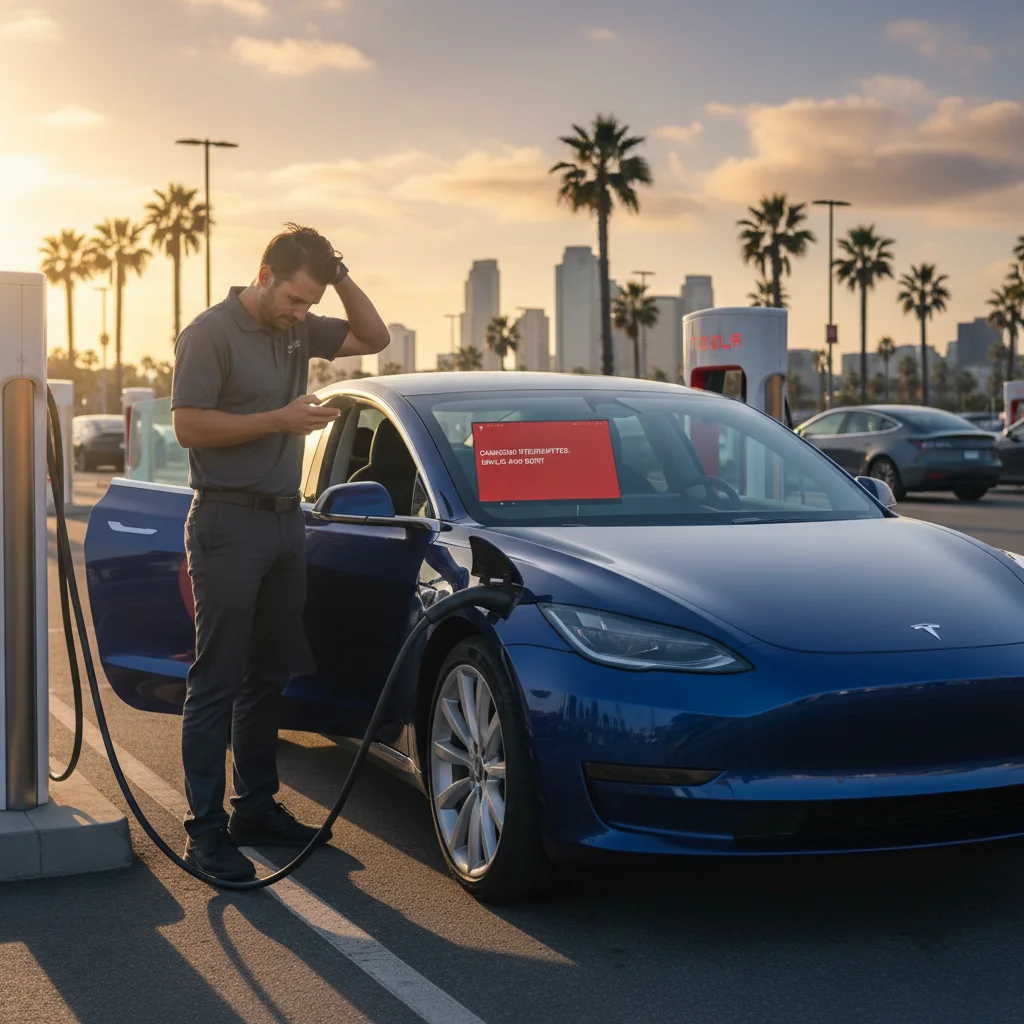
Knowing your options before you get into this situation can save you time, stress, and the risk of getting stranded. Here’s a guide to navigating a down or full Supercharger in San Diego.
Why Superchargers go down or fill up in San Diego
The Tesla Supercharger network is famously reliable, but it’s not invincible. In a high-adoption area like San Diego, stations face heavy use and a unique set of challenges.
First, let’s talk about full stations. It’s often a simple matter of supply and demand. San Diego has one of the highest concentrations of Teslas in the country. During peak hours—weekday mornings and evenings, weekend afternoons, and especially on holiday travel days—popular stations can fill up fast. Locations at major shopping centers like Fashion Valley or The Shoppes at Carlsbad are prime examples. The in-car navigation system provides real-time availability, but a station can go from two open stalls to a five-car wait in minutes.
A tesla supercharger down or supercharger offline scenario is more complex. The issue can stem from several sources:
- Grid and Power Issues: Sometimes the problem isn’t with Tesla’s hardware but with the local utility. Planned maintenance by SDG&E or unexpected power outages can take an entire station offline.
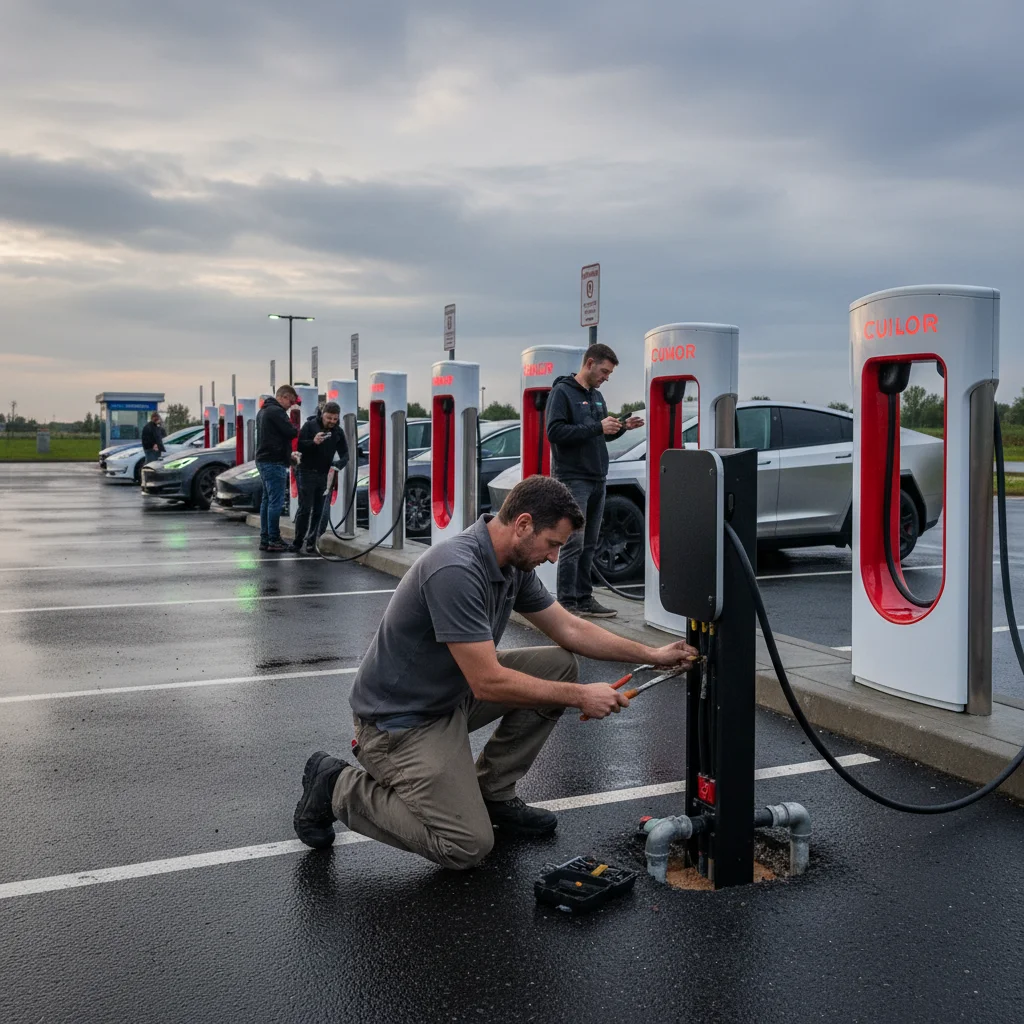
- Hardware Failure: Each Supercharger stall is a complex piece of equipment. High-voltage cabinets, cooling systems, cables, and connectors can fail. While Tesla is quick to dispatch technicians, a fix can take hours or days.
- Network and Software Problems: A station needs to communicate with Tesla’s central servers to authenticate your vehicle and process billing. A loss of internet connectivity or a software glitch can render the stalls unusable, even if they have power.
- Vandalism or Accidents: Unfortunately, public infrastructure is sometimes damaged. A car backing into a stall or a vandal cutting a cable can disable a portion of the station until it’s physically repaired.
Backup options near Carlsbad, Mission Valley, and Otay
When you find your planned Supercharger is a no-go, your next move depends on your location and your remaining range. Knowing your local backup options is critical. Always use an app like PlugShare or your car’s navigation to check the real-time status of these alternatives before you head there.
Carlsbad
The Supercharger at The Shoppes at Carlsbad is a busy hub. If it’s packed or down, you have solid alternatives. Just a few minutes away, the Carlsbad Premium Outlets host a large Electrify America station with high-speed CCS chargers. If you have a CCS adapter for your Tesla, this is your best bet. You’ll also find EVgo stations at nearby shopping centers and some Level 2 chargers at places like The Forum, which can provide a slow-but-steady charge if you plan to shop or dine for an hour or two.
Mission Valley
This is one of the most charger-dense—and congested—areas in San Diego. If the Fashion Valley or Westfield Mission Valley Superchargers are unavailable, don’t panic. Both malls also have non-Tesla DC fast chargers from networks like EVgo and Electrify America. Just across the I-8, you can find more fast chargers at the Fenton Marketplace (IKEA, Costco). The key in Mission Valley is to have your CCS adapter ready and your EVgo or EA app set up to avoid wasting time.
Otay Mesa
Getting stuck near the border with low range can be stressful. The Supercharger at the Vons on Del Sol Blvd is vital for locals and travelers. If it’s down, your options are more limited but still exist. Your best bet is to head north to the Otay Ranch Town Center, which has a reliable set of Electrify America chargers. There are also a few ChargePoint DC fast chargers scattered around the Eastlake and Chula Vista areas. Given the distances, this is a scenario where having at least 10-15% of your battery is crucial before you start hunting for a backup.
What to do if you arrive low and can’t wait
Pulling up to a dead station with 5% battery is a different problem than arriving with 30%. Your immediate decision—to wait, to drive to a backup, or to call for help—depends entirely on your SoC and your circumstances.
First, assess your situation honestly. Check your Tesla’s navigation. How far is the next closest working charger? Not just a Supercharger, but any compatible DC fast charger. The car will tell you if you have enough range to make it. Trust its calculation, but understand it doesn’t account for unexpected traffic or hills. If it says you’ll arrive with 2% battery, that’s a serious gamble.
Next, check the Tesla app for details on the outage. Sometimes it provides an estimated time for the station to come back online. If it’s a 15-minute software reboot, it might be worth waiting. If it’s a power outage with no ETA, you need a Plan B.
This is the point where you have to weigh the risks. Trying to “limp” to another station on a nearly-empty battery can be dangerous. Your car may reduce power, and you could end up stranded on the side of a busy freeway. Understanding the risks is key, and it’s important to know what to do when your EV is running low on battery. If you’re in a safe, well-lit parking lot, you have more time to make a decision than if you’re on a remote road late at night. Don’t let “range anxiety” turn into a real safety issue. If the math looks too close to call, it’s better to get help where you are than to get stuck somewhere worse.
Magic Dock, NACS, and non-Tesla SC access today
The charging landscape is changing quickly, which affects Supercharger availability. For years, Superchargers were an exclusive Tesla club. That’s no longer the case.
First, Tesla is opening its network to other brands. Some stations are being retrofitted with “Magic Docks”—a clever integrated adapter that allows vehicles with a CCS port (like a Ford Mustang Mach-E or Hyundai Ioniq 5) to charge. In San Diego, the El Cajon Supercharger is one such site. While this is great for EV adoption overall, it means more cars are now competing for the same stalls.
Second, most automakers are now adopting Tesla’s plug, officially known as the North American Charging Standard (NACS). Soon, new Fords, GMs, Rivians, and others will roll off the assembly line with a NACS port, giving them native access to the Supercharger network. This will dramatically increase demand at already busy stations.
The takeaway for Tesla drivers? Your exclusive network is becoming a shared one. This makes having a CCS adapter in your trunk more important than ever. It unlocks all the non-Tesla DC fast charging stations from Electrify America, EVgo, and ChargePoint, turning them into viable supercharger backup options. If your go-to Supercharger is full, being able to confidently pull into an EA station and plug in is a huge advantage. It diversifies your options and reduces your reliance on a single network.
When mobile rescue beats waiting for a stall
Sometimes, waiting isn’t an option and driving to a backup is too risky. This is the moment to stop thinking about charging stations and start thinking about roadside rescue.
Consider these scenarios:
- You’ve arrived at a dead Supercharger with less than 5% battery, and the next nearest station is 15 miles away.
- You have a critical, time-sensitive appointment—a flight to catch at SAN, a job interview, or a doctor’s visit—and you can’t afford to wait an unknown amount of time.
- The station is down, it’s late at night, and you’re in an unfamiliar part of the county where you don’t feel safe waiting.
- Your car is already displaying low-power warnings, and you’re worried about getting stranded on the freeway.
In these cases, the smartest and safest move is to call for help. A tow truck is one option, but it’s slow, expensive, and a hassle. A flatbed tow to the next charger can take hours and risks damage to your vehicle. Instead of risking a complete shutdown and needing an out-of-charge recovery, a better option is proactive help. Our mobile EV charging service is designed for exactly this situation. We come to you and deliver enough charge directly to your battery to get you safely to the next working station or all the way home.
When to call Charge Pro
If you’re stranded at a dead Supercharger with too little range to make it to the next station, don’t wait for the battery to hit zero. It’s faster, safer, and less stressful to get a direct charge right where you are.
Call us at (858) 808-6055 — we’ll roll a Cybertruck rescue truck to you.