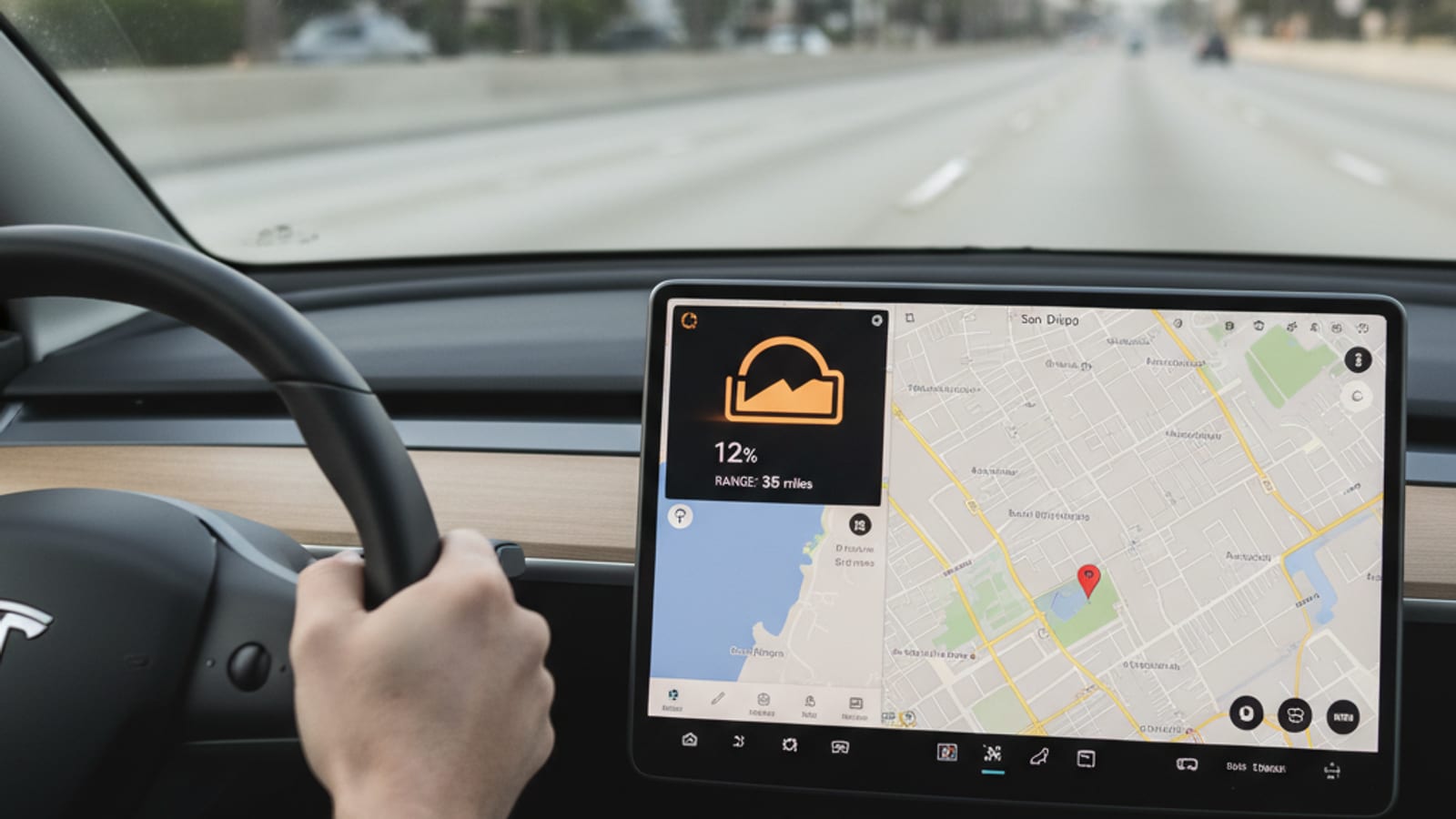
TL;DR
- 58% of U.S. EV owners report range anxiety as a top concern, per J.D. Power 2024 EV Experience Study
- 1 in 5 EV drivers in the U.S. has run out of charge at least once, according to AAA survey data
- San Diego has 3,200+ public charging ports as of Q1 2026 (AFDC data), but port availability during peak hours drops to 60–70% utilization on key corridors
- The top 3 causes of unexpected charge loss in San Diego: HVAC use in summer heat (up to 40% range reduction), freeway speeds sustained above 75 mph, and failed charge sessions at public stations
Range anxiety isn’t irrational — it’s based on real patterns. Here’s what the data says about why EV owners run out of charge, how often it happens, and what the San Diego infrastructure gap actually looks like.
How common is running out of charge?
The AAA 2024 survey of 1,200+ EV owners found 1 in 5 EV drivers has run out of charge at least once. Among drivers who charge primarily at public stations (rather than home), that rate climbs to 1 in 3.
J.D. Power’s 2024 Electric Vehicle Experience (EVX) Study puts range anxiety at 58% of EV owners reporting it as a concern — making it the single most-cited ownership worry, ahead of charging time (52%) and charging costs (41%).
Why the gap between “enough range on paper” and “running out in practice”:
Most EV owners understand their car’s EPA-rated range. Fewer understand the conditions that compress that range in real driving:
| Factor | Range reduction |
|---|---|
| A/C at max in 90°F+ heat | 20–40% |
| Freeway speeds 75–80 mph (vs. EPA test 55 mph) | 15–25% |
| Steep sustained climbing (Palomar Mountain, I-8 alpine) | 10–20% |
| 12V battery degradation (Tesla, older models) | 5–15% reduction in HV system efficiency |
| Cold weather (rare in SD, but inland valleys hit 35–40°F) | 10–20% |
In San Diego County, summer heat combined with freeway driving is the primary culprit. A Tesla Model 3 with a rated 358-mile range in EPA conditions may deliver 215–250 miles on a hot July day driving I-15 from downtown San Diego to Temecula and back at highway speeds with A/C running.
San Diego’s charging infrastructure: what the numbers show
The U.S. Department of Energy’s Alternative Fuels Data Center (AFDC) tracks public EV charging ports in real time. As of Q1 2026, San Diego County has:
- 3,247 public Level 2 charging ports (primarily 7–11 kW, adds 20–40 miles/hour)
- 512 DC fast charging ports (50–350 kW, adds 60–150+ miles in 15–30 minutes)
- 48 Tesla Supercharger stalls across 12 stations in the county
That sounds like a lot. Here’s what the data doesn’t show: port availability.
UC Davis Policy Institute for Energy, Environment, and the Economy (2023) found that 1 in 5 public charging sessions fails to complete due to hardware error, network connectivity issues, or occupied ports. In high-traffic corridors (I-5 coastal, I-15 north county, SR-78), Level 2 port utilization during peak hours (5–8 PM) runs 60–70%, leaving limited availability when drivers need it most.
The freeway shoulder problem. San Diego’s 2,300 miles of county highways have almost no emergency EV charging coverage. Caltrans’ Freeway Service Patrol (FSP) carries jump-start equipment for 12V batteries but does not carry EV charging equipment. CHP assistance is limited to traffic control and calling tow services. If your EV dies on I-5, I-8, I-15, I-805, or SR-94, your options are:
- Wait for a tow (45–90 minutes, typically AAA flatbed)
- Walk to the nearest exit and find charging (often 3–8 miles)
- Call a mobile EV charging service (25–60 minute response, 30–60 miles delivered on-site)
Which San Diego EV drivers are most at risk?
Range anxiety and actual range-out incidents cluster around specific profiles:
Long-distance commuters (North County ↔ Downtown) — Round trip from Oceanside or Vista to downtown San Diego runs 70–90 miles. For EV owners who can’t charge at work, this is tight on a vehicle with 200 miles of real-world range.
Weekend mountain drivers — Julian, Palomar Mountain, and the Laguna Mountains involve sustained climbing that burns range at 2–3× flat-road rates. The descent regenerates some, but the net loss is significant.
Renters without home charging — AFDC data shows 35–40% of EV owners nationally lack access to home charging (primarily renters and multi-family residents). These drivers depend entirely on public charging and face the highest risk of charge depletion.
Older EV battery packs — Tesla Model S (2012–2019) and Nissan Leaf (pre-2018) are the most common vehicles with battery degradation issues in San Diego’s aging fleet. A 2016 Leaf originally rated for 107 miles may now deliver 60–75 miles, fundamentally changing the driver’s charging behavior requirements.
What actually prevents range-out incidents
Insurance industry and AAA data identify the behaviors that correlate with lower rates of range depletion:
Home charging adoption is the single biggest preventive factor. Drivers who plug in nightly maintain consistent starting SOC (state of charge) and are far less reliant on public infrastructure timing. CalEPA and CPUC incentive programs subsidize Level 2 home charger installation in San Diego County — rebates from SDG&E Clean Energy Marketplace run $500–$1,000 depending on income qualification.
Trip pre-planning with real-time charging data — apps like PlugShare, A Better Routeplanner (ABRP), and native navigation in Tesla/Rivian use real-time port availability data. Drivers who route with live availability data have 60% lower rates of charging-related delays, according to ChargePoint network usage studies.
Understanding your vehicle’s real-world range — not EPA-rated range. Most EV manufacturer apps (Tesla, MyChevrolet, FordPass) show energy consumption history. Drivers who understand their per-mile kWh consumption in different conditions make better charging decisions.
When prevention fails: what happens in San Diego
Despite planning, range-out events happen. The question is response time and outcome. In San Diego County:
AAA tow response for dead EVs: 30–90 minutes for flatbed dispatch. The vehicle is towed to the nearest charging station. Driver either waits at the station for 45–90 minutes of charging, or arranges other transportation. Total time: 2–6 hours.
Mobile EV charging response: 25–60 minutes to your location. 30–60 miles of range delivered on-site in 15–30 minutes. Total time: 45–90 minutes from call to driving.
CHP/Caltrans assistance: Traffic control and tow referral only. No charging capability.
The infrastructure gap is real, and it won’t close overnight. San Diego County’s EV charging master plan calls for 4,500 public ports by 2028 — a 40% increase from today. But port count doesn’t address rural coverage gaps, public station reliability rates, or freeway-shoulder response.
For San Diego EV owners who drive beyond charging infrastructure density — North County inland, East County mountain routes, or high-mileage commutes — mobile EV charging serves as insurance against a gap the grid hasn’t filled yet.
Frequently asked questions
How many EV owners in San Diego County have run out of charge?
National data (AAA 2024) puts the rate at 1 in 5 EV owners overall, climbing to 1 in 3 for those without home charging. San Diego-specific data isn’t broken out, but the county’s high EV adoption rate (one of the top 5 metro areas nationally by EV per capita) and diverse geography suggest the rate mirrors or exceeds the national average.
What causes unexpected range loss in San Diego?
Summer heat and A/C use is the primary cause — A/C can reduce range by 20–40% at peak. Freeway speeds (I-5, I-15, I-805) consistently above 70 mph reduce range by 15–25% versus EPA test conditions. Inland mountain drives (Palomar, Julian) add a 10–20% range reduction from sustained climbing.
What should I do if my EV runs out of charge on a San Diego freeway?
Pull to the right shoulder, activate hazard lights, and stay in the vehicle if it’s safe to do so. Call a mobile EV charging service — a van with portable DC or Level 2 charging equipment will dispatch to your location in 25–60 minutes and deliver 30–60 miles of range on-site. See our freeway breakdown guide for step-by-step instructions.
We dispatch across all of San Diego County — including high-risk corridors like I-15 North County, I-8 East County, and SR-78. Call (858) 808-6055 for immediate dispatch.